3D Printing · OpenSCAD · Raffle Hardware · AI-Assisted Design

Raffle Ticket Haboob.

#FPD — Forced Participant Dispersion.

Hand-shaking a bucket full of thin raffle tickets turns out to be surprisingly bad at breaking up clumps. The obvious solution was therefore a cordless leaf blower, a custom bayonet receiver, screened exhaust vents, anti-ingestion baffles, heat-set inserts and reusable drill fixtures.

RYOBI 220 CFM 2-gallon bucket Printed hardware MacGyver Vision System™
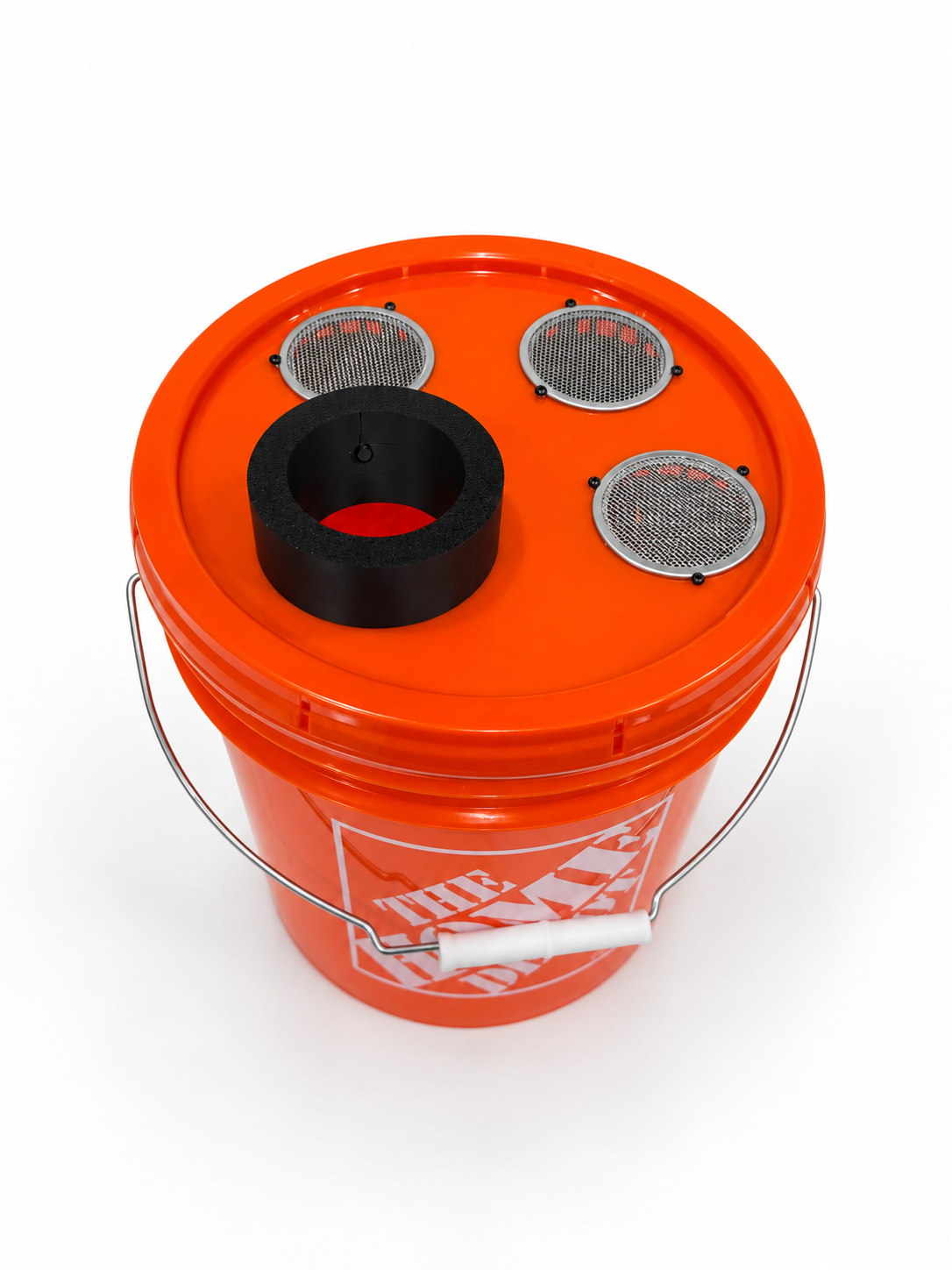
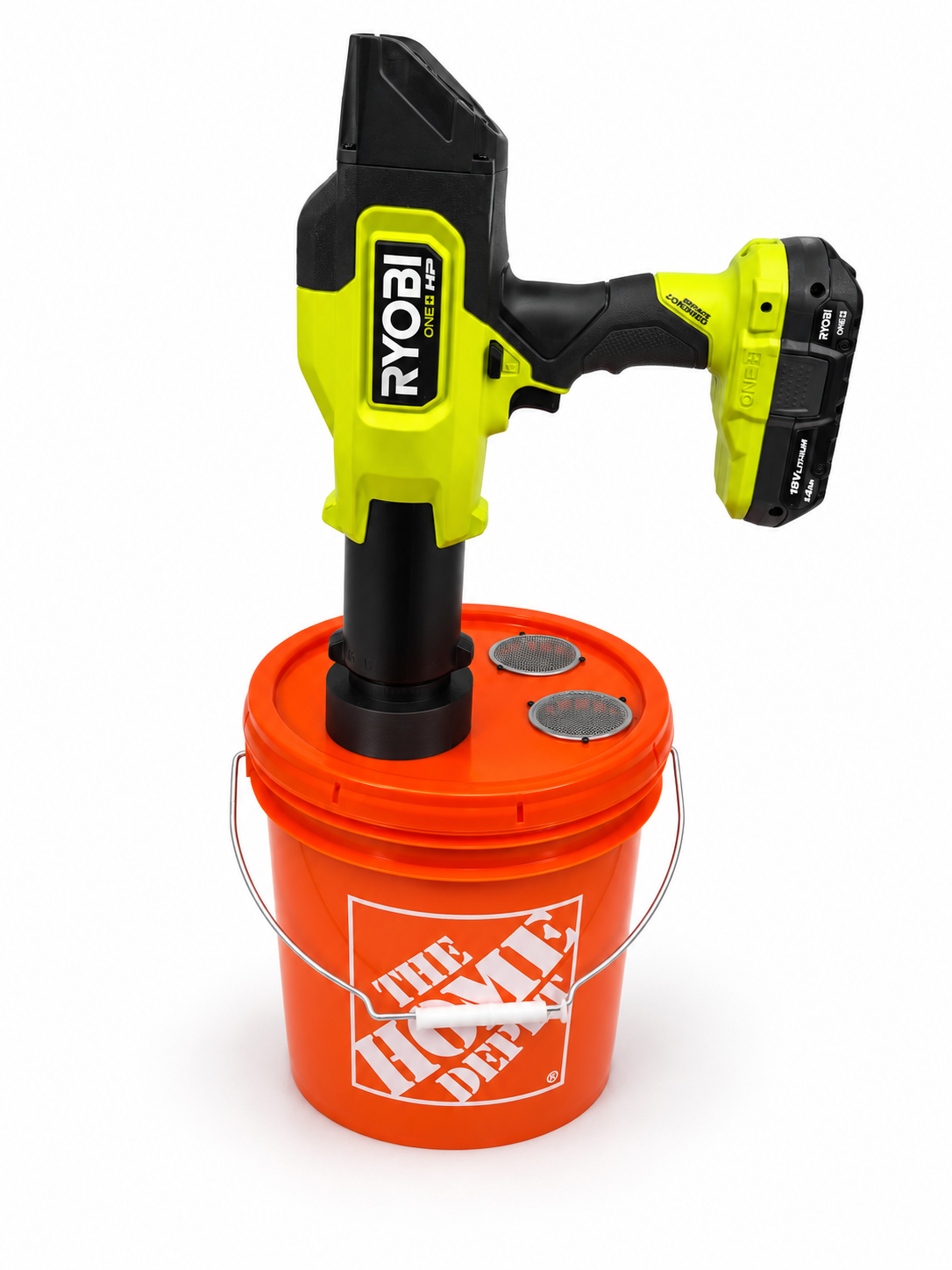
Completed Raffle Ticket Haboob with RYOBI blower installed in the bucket lid
Final physical buildScience for a more random tomorrow.

How this escalated

Shaking the bucket left clumps.
A 220 CFM blower seemed completely reasonable.
Then the lid needed vents.
Then tickets attacked the vents.
Then the baffles needed baffles-level engineering.

The problem

Raffle tickets are
surprisingly clingy.

Thin tickets tend to travel as little packs instead of redistributing cleanly when a bucket is shaken. The Haboob uses short bursts of high-volume airflow to lift the ticket mass, break up clumps and let everything settle before the next pulse.

The working system

A removable lid assembly turns an ordinary 2-gallon bucket into a purpose-built mixer without permanently sacrificing stackability.

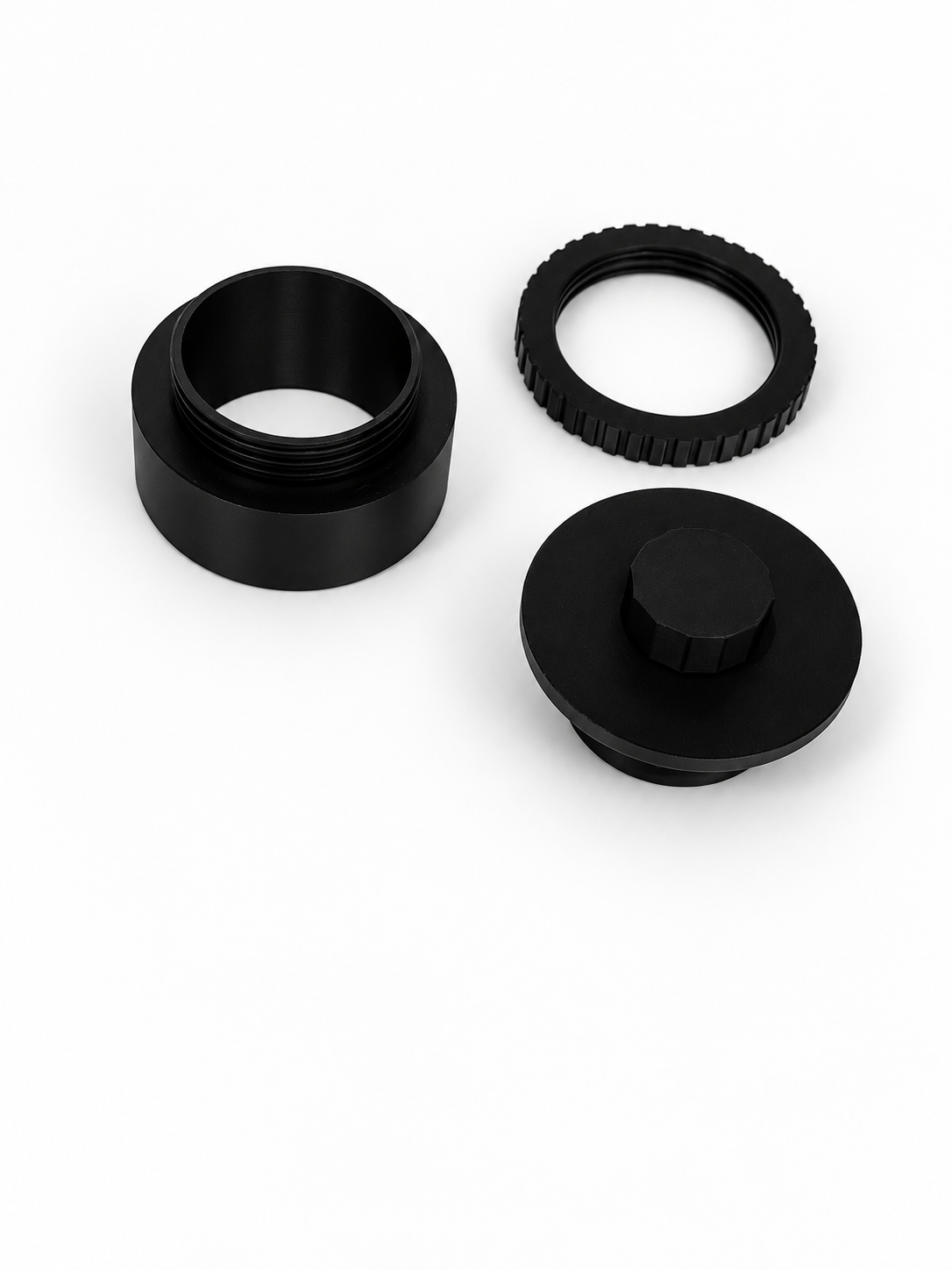
  • Threaded blower receiver and knurled underside locknut
  • Bayonet storage plug
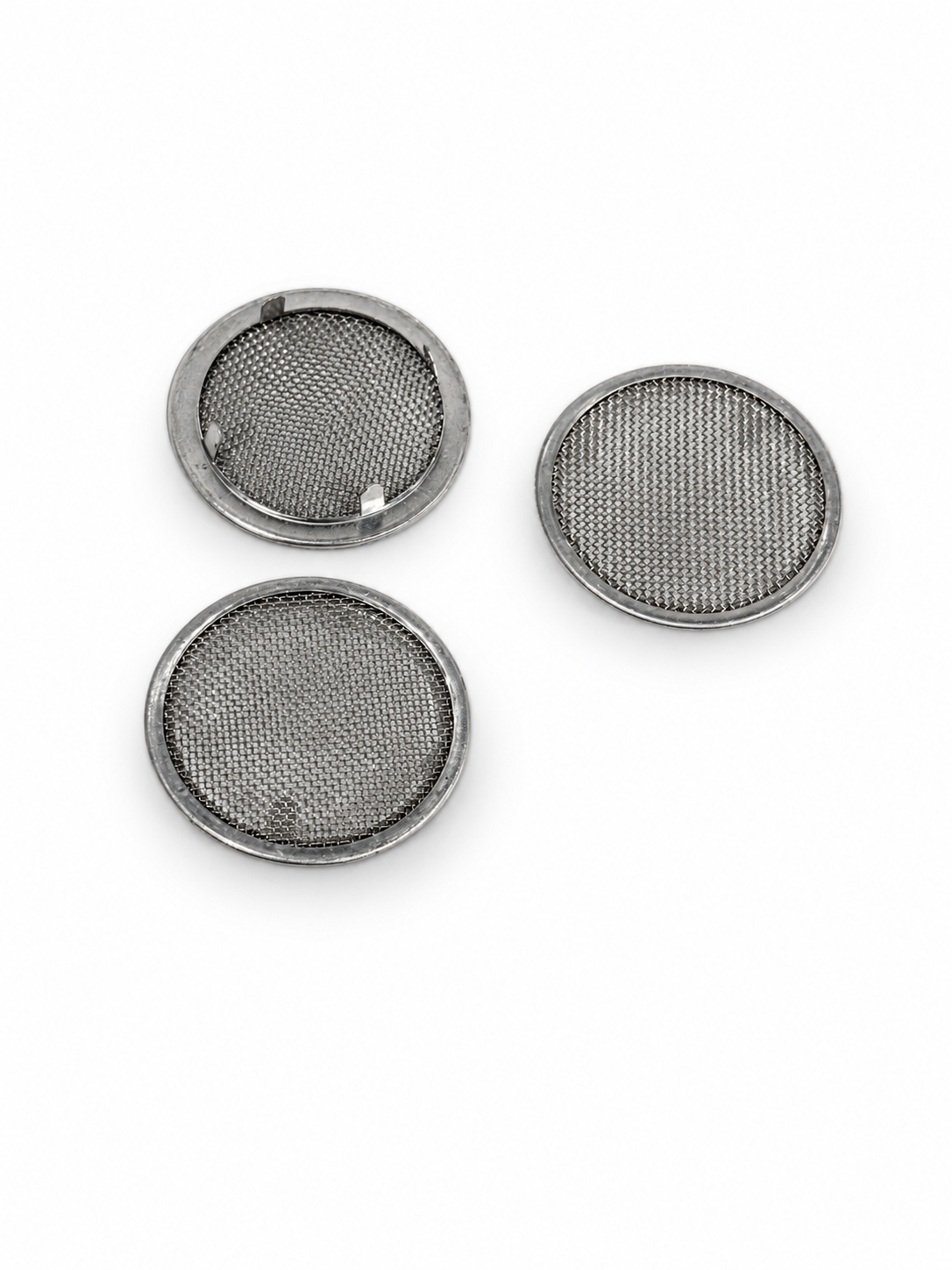
  • Three screened exhaust vents
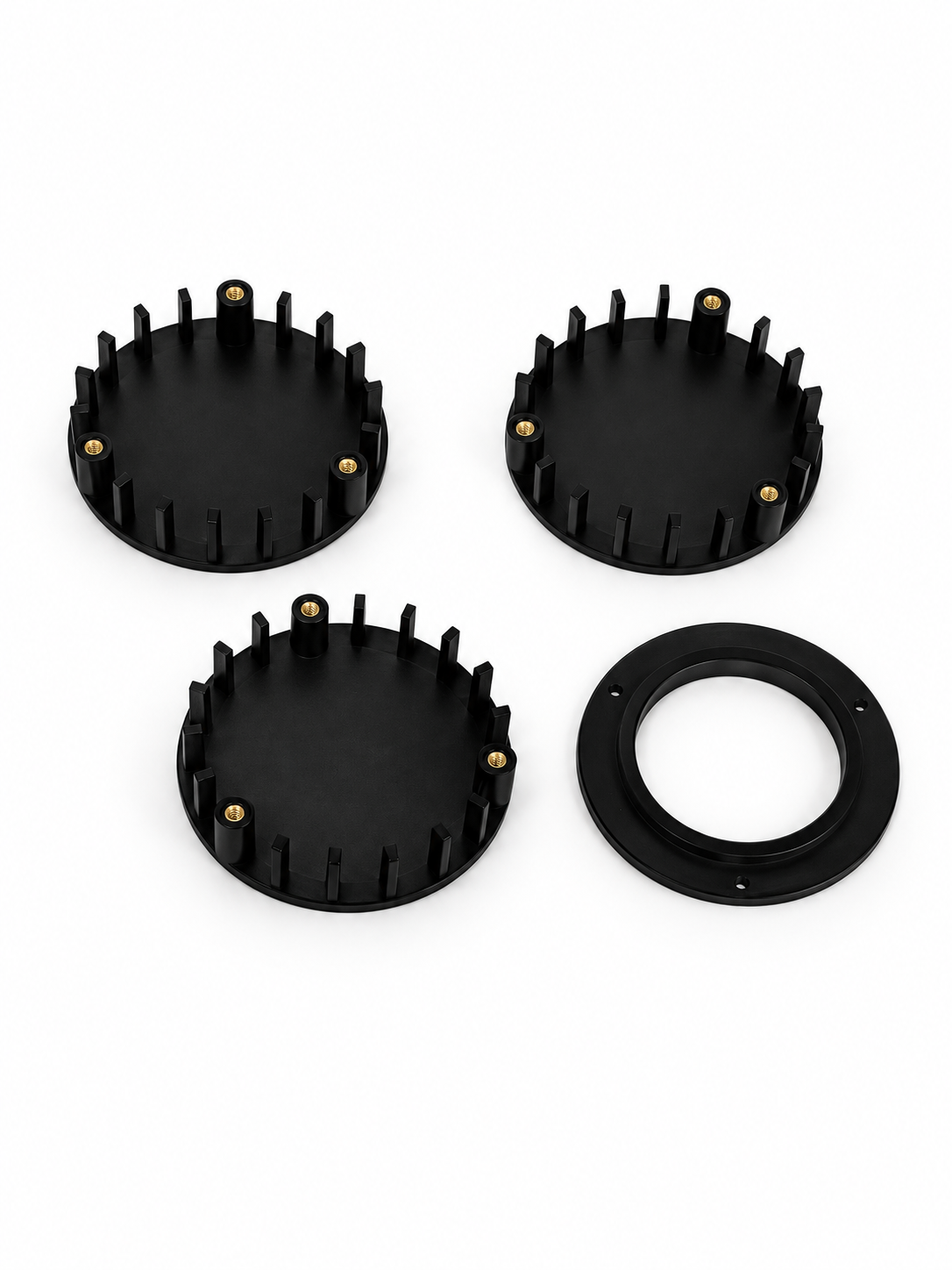
  • Three anti-ingestion baffles
  • M2.5 heat-set inserts and screws
  • Reusable two-sided layout/drill template
The designed blower

The receiver was designed and physically fit-tested around the RYOBI 18V ONE+ HP Compact Brushless 220 CFM Blower, model PSBLB01B.

  • 220 CFM manufacturer-rated airflow
  • Up to 140 MPH manufacturer-rated airspeed
  • Custom receiver bore, bayonet lugs and locking geometry
  • Other blowers may require geometry changes
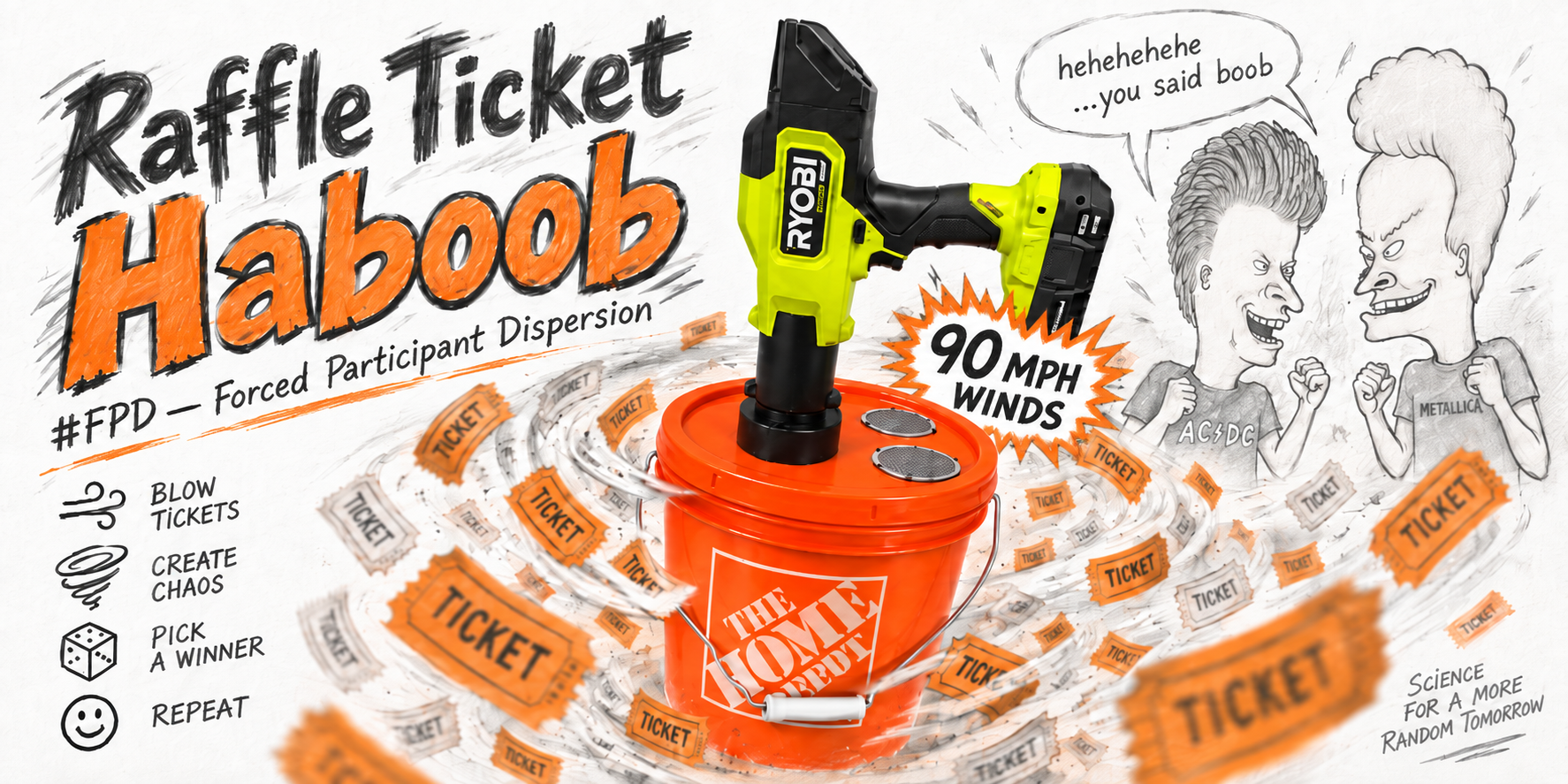
About the "90 MPH winds" artwork: the roughly 90 MPH figure is an idealized calculation of average inlet velocity through the approximately 2.25-inch receiver bore at 220 CFM. It is not measured ticket velocity, measured internal bucket wind speed or a calibrated performance specification.

Hardware

Everything on the lid
earned its job.

The final system is a mixture of printed and non-printed hardware. Most of the complexity came from making the lid removable, vented, repeatable and resistant to eating raffle tickets.

01 // RECEIVER

Threaded blower bulkhead

The bayonet receiver locks the RYOBI blower into the lid and can be removed when the event hardware needs to disappear back into storage.

02 // LOCKNUT

Knurled underside nut

The removable threaded locknut secures the receiver without permanently bonding it to the lid.

03 // VENTS

Three screened exhausts

Round mesh vents let the injected air escape instead of turning the lid into the wrong kind of projectile.

04 // BAFFLES

Anti-ingestion cages

The final 82 mm baffles clear the screen tabs, use perimeter ribs and preload lightly against the lid to reduce ticket-ingestion gaps.

05 // INSERTS

Repeatable mounting

M2.5 heat-set inserts and button-head screws replaced hot-glued mounting so baffle height and retention were no longer guesswork.

06 // TEMPLATE

Two-sided drill fixture

The reusable template lays out each vent, then flips over and keys into the finished hole to transfer the mounting-hole pattern.

07 // PLUG

Bayonet storage plug

Remove the blower, install the plug and the bucket can remain closed between mixing sessions.

08 // PROCESS

Physical validation

The actual bucket, lid, screens, hardware, tickets and blower got the final vote on every important revision.

Actual build

Printed parts.
Real hardware.

The page does not need every product photo to tell the story. These are the pieces that best show how the printed components and off-the-shelf hardware became the finished system.

MacGyver Vision System™

I put the iPhone
inside the bucket.

Internal video made the airflow behavior visible instead of theoretical. Taping an iPhone inside the bucket showed tickets plastering against the vent screens and slipping into the gaps around early baffles, which directly drove the final cage and preload design.

Bottom viewThe unofficial MacGyver Vision System™ ticket motion viewed from inside the bucket during real blower testing.
Side viewThe unofficial MacGyver Vision System™ documenting the raffle-ticket haboob from inside the storm.

AI-assisted iteration

The workflow was still physical.

AI helped translate measurements into printable geometry, generate and revise OpenSCAD models, evaluate clearances, design threads, bayonet features, baffles and fixtures, and organize the resulting documentation. The printer, the hardware and the actual raffle tickets got the final vote.

MeasureModelPrintPhysically testReviseRepeat

Safety matters

This is a leaf blower attached to a bucket lid.

  • Fully seat and positively retain the lid before blower operation; duct tape around the lid/bucket seam is recommended as secondary event-use retention.
  • Never operate with blocked vents, damaged printed parts, loose hardware or cracked components.
  • Use short blower pulses rather than sustained full-power operation.
  • Inspect the receiver, locknut, bayonet, baffles, heat-set inserts, screws and vent screens before use.
  • Keep faces, hands and bystanders out of any possible lid or loose-component path.
  • Stop immediately if the lid deforms excessively or any hardware moves.
  • Verify fit with the actual bucket, lid, blower and printed parts being used.
  • This is a hobbyist design and is not certified safety equipment.

Build resources

The website tells the story.
GitHub has the build.

The repository is the single source of truth for current STL and OpenSCAD files, Bambu Studio project, hardware requirements, assembly instructions, design notes, photos, videos, safety information and license terms.

STL + OpenSCADReceiver, locknut, plug, baffle and reusable layout/drill template.
Bambu Studio projectCurrent 3MF project files for the physically validated design.
Assembly instructionsHole sizes, lid layout, insert installation and final hardware assembly.
Shopping listVent screens, heat-set inserts, fasteners, buckets, lids and tooling.
Design notes + videosIteration history, clearances and the internal airflow test footage.
License + disclaimerCC BY-NC 4.0 terms and the project's use-at-your-own-risk notice.
Raffle Ticket Haboob GitHub social graphic
Independent maker project. This project is not affiliated with or endorsed by RYOBI, Techtronic Industries, The Home Depot, Leaktite, Amazon or Harbor Freight. See the repository for the full disclaimer and CC BY-NC 4.0 license terms.
#FPD
Forced Participant Dispersion.

Arroyo Cooperative

Science for a more
random tomorrow.

A raffle-ticket problem became a threaded bulkhead, bayonet lock, vent system, baffle cage, drill fixture, internal camera test rig and one extremely unnecessary but effective use of a cordless blower.