3D Printing · RC · Reusable Mechanical Architecture

Spirit WAVE Stand.

Folding · Indexed · SMUT™-Powered

A compact desk and simulator stand for the Spirit WAVE transmitter, adapted from the proven SMUT™ side-mount pivot system and rebuilt around a reusable mechanical core instead of another one-off bracket.

PETG 46 mm Header Mule Spring ball plunger No permanent radio modification
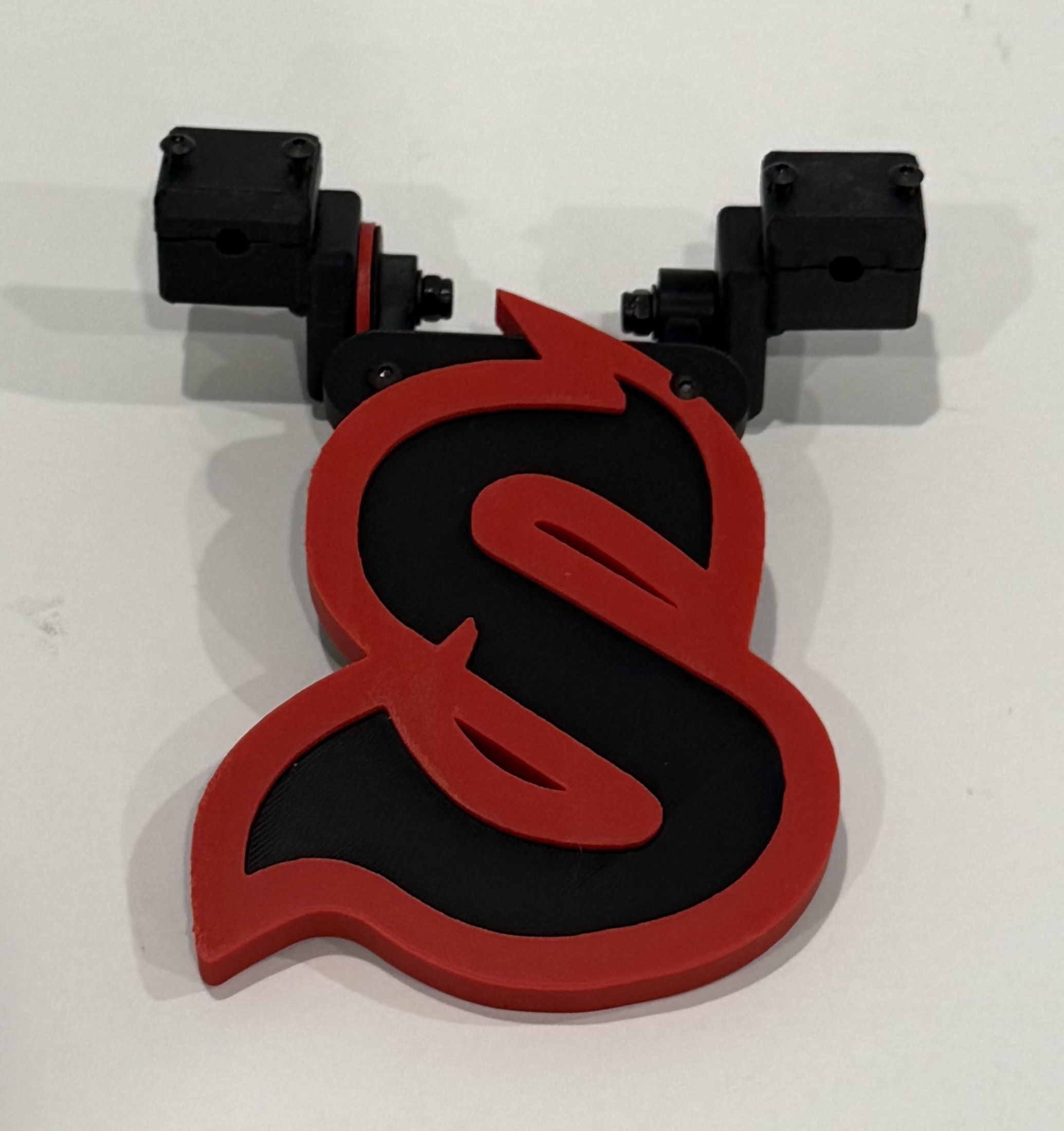
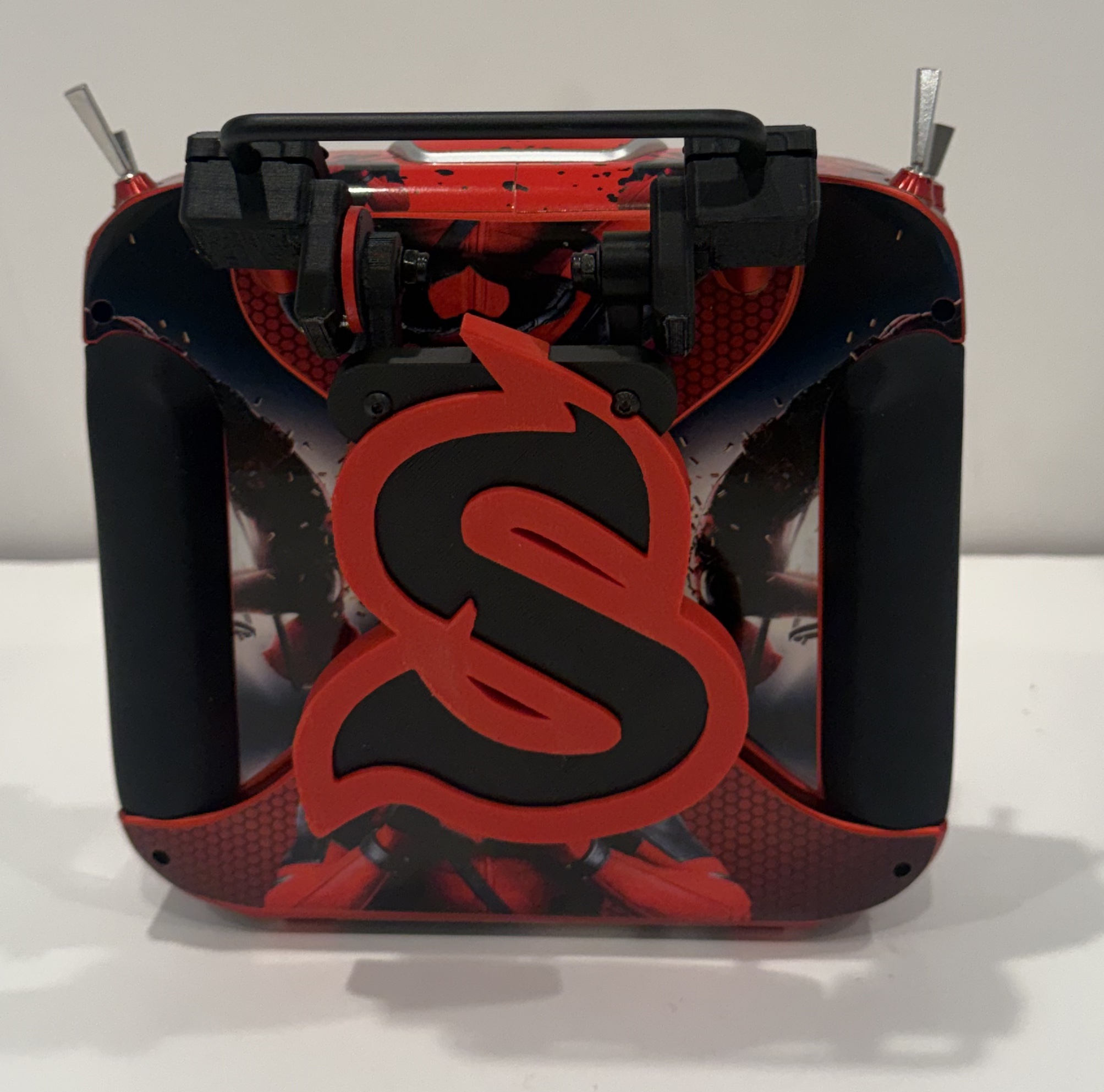
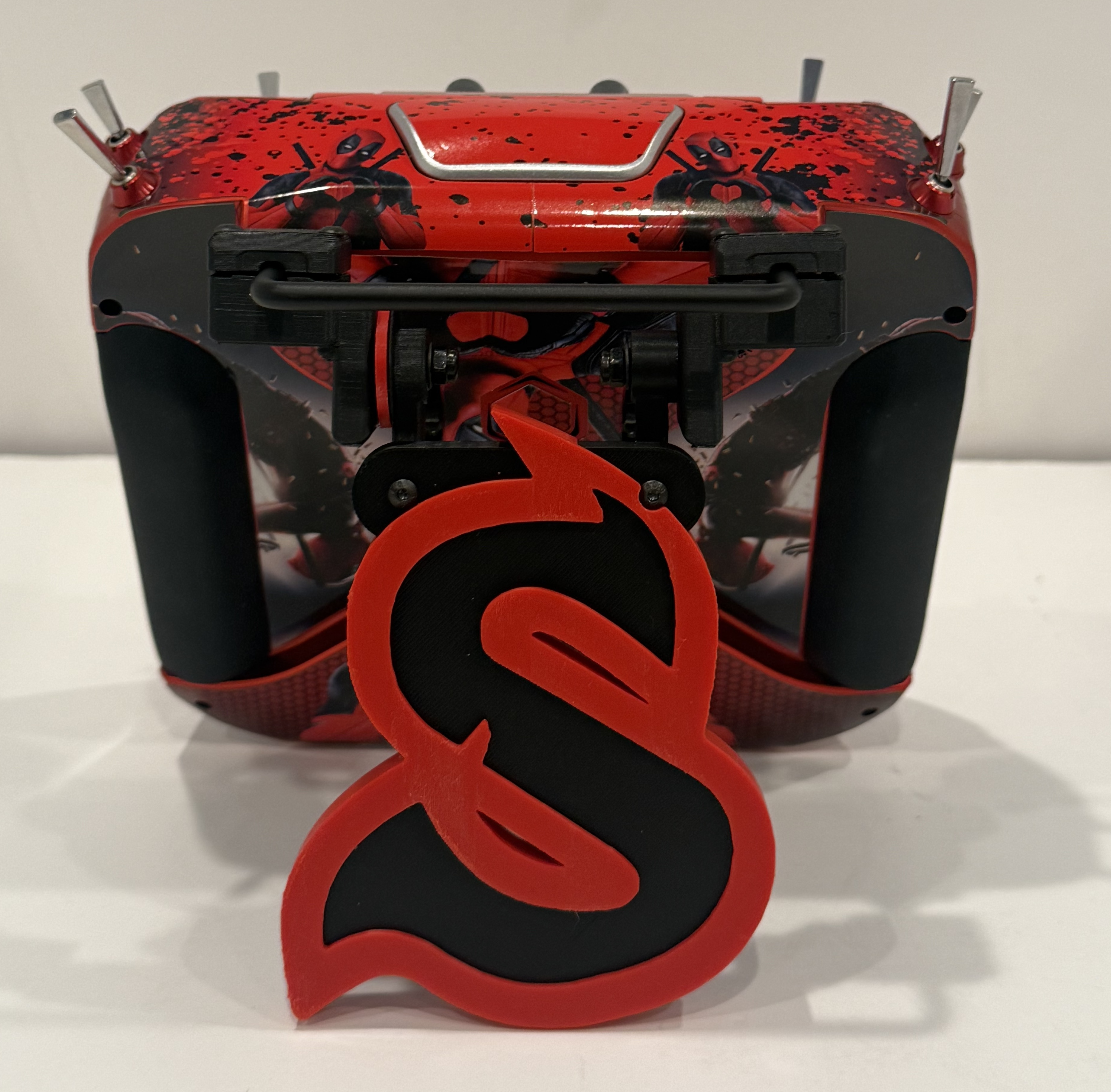
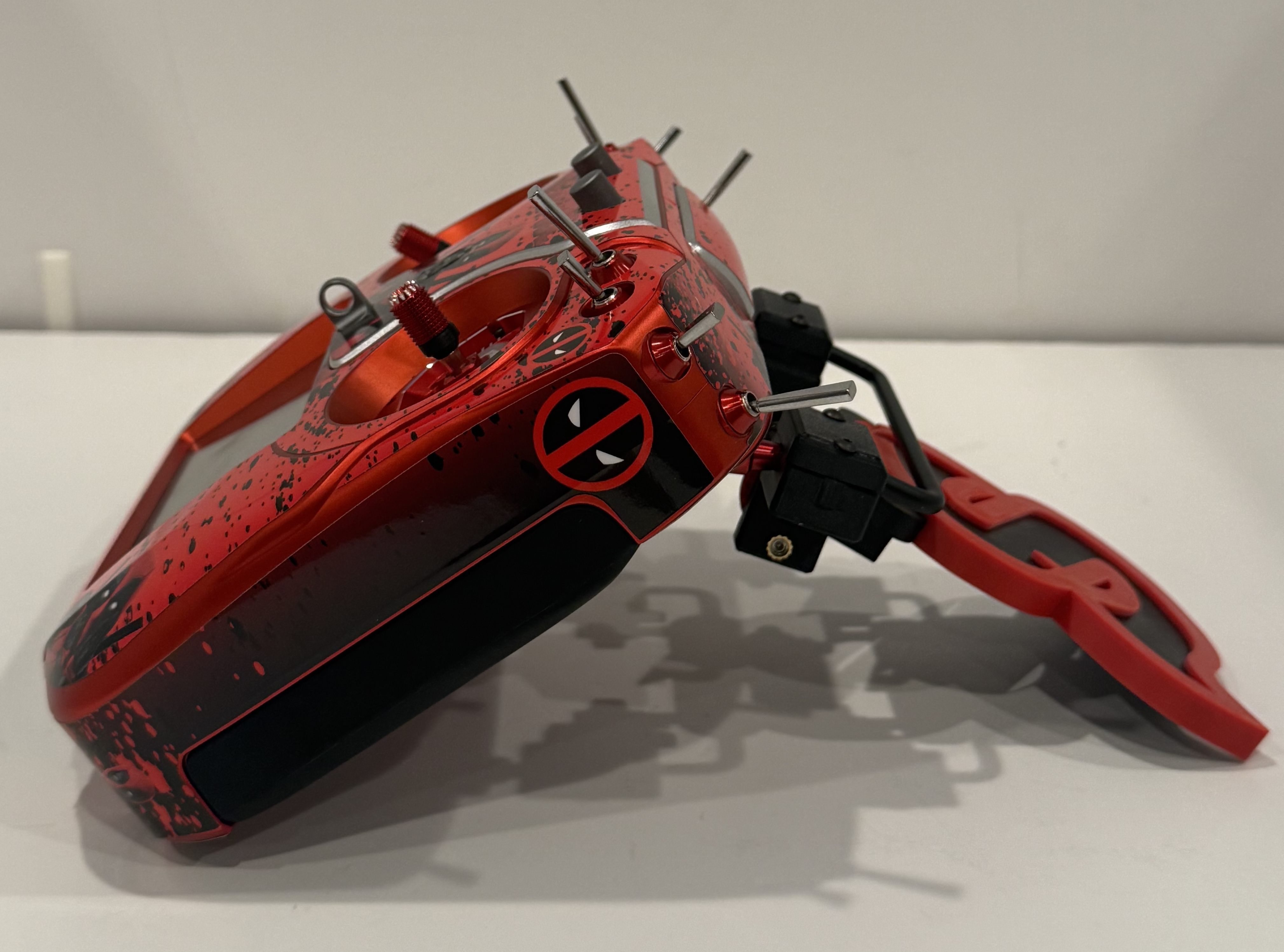
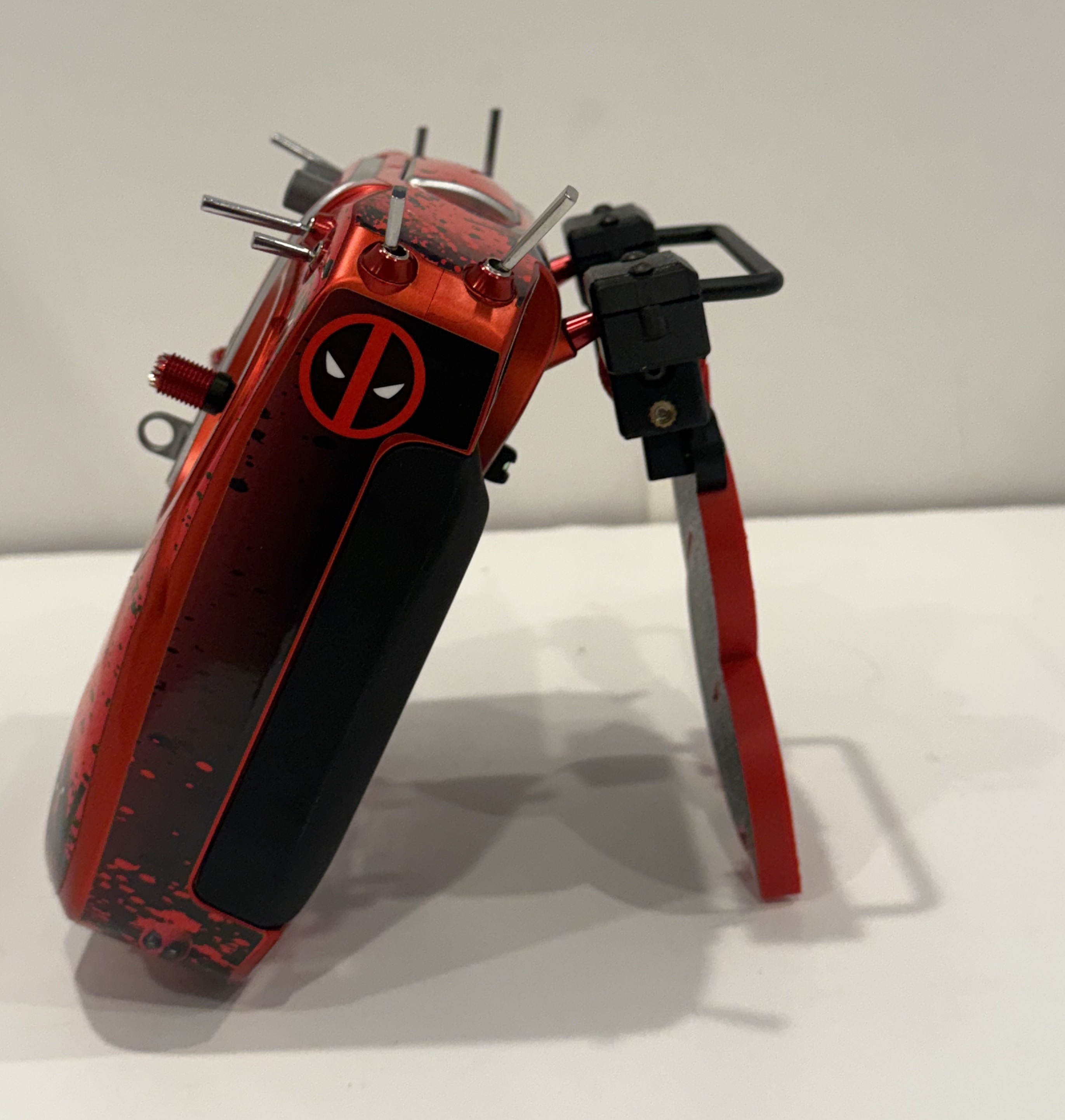
Spirit WAVE transmitter with the folding indexed stand deployed
Spirit WAVE implementationDesigned. Printed. Tested.

How this escalated

The iX14 proved SMUT™ worked.
The WAVE had a completely different round handle.
So the mechanism got transplanted instead of reinvented.
Then the header became its own reusable interface.
Now the stand body is the part that gets to be weird.

What it is

Same proven mechanism.
Different radio.

The Spirit WAVE stand mounts around the transmitter's existing round metal carrying handle without drilling or permanently modifying the radio. It folds against the back, preserves normal handle access and uses a spring-loaded ball plunger with a replaceable keyed detent ring for positive indexed positions.

The radio-specific layer

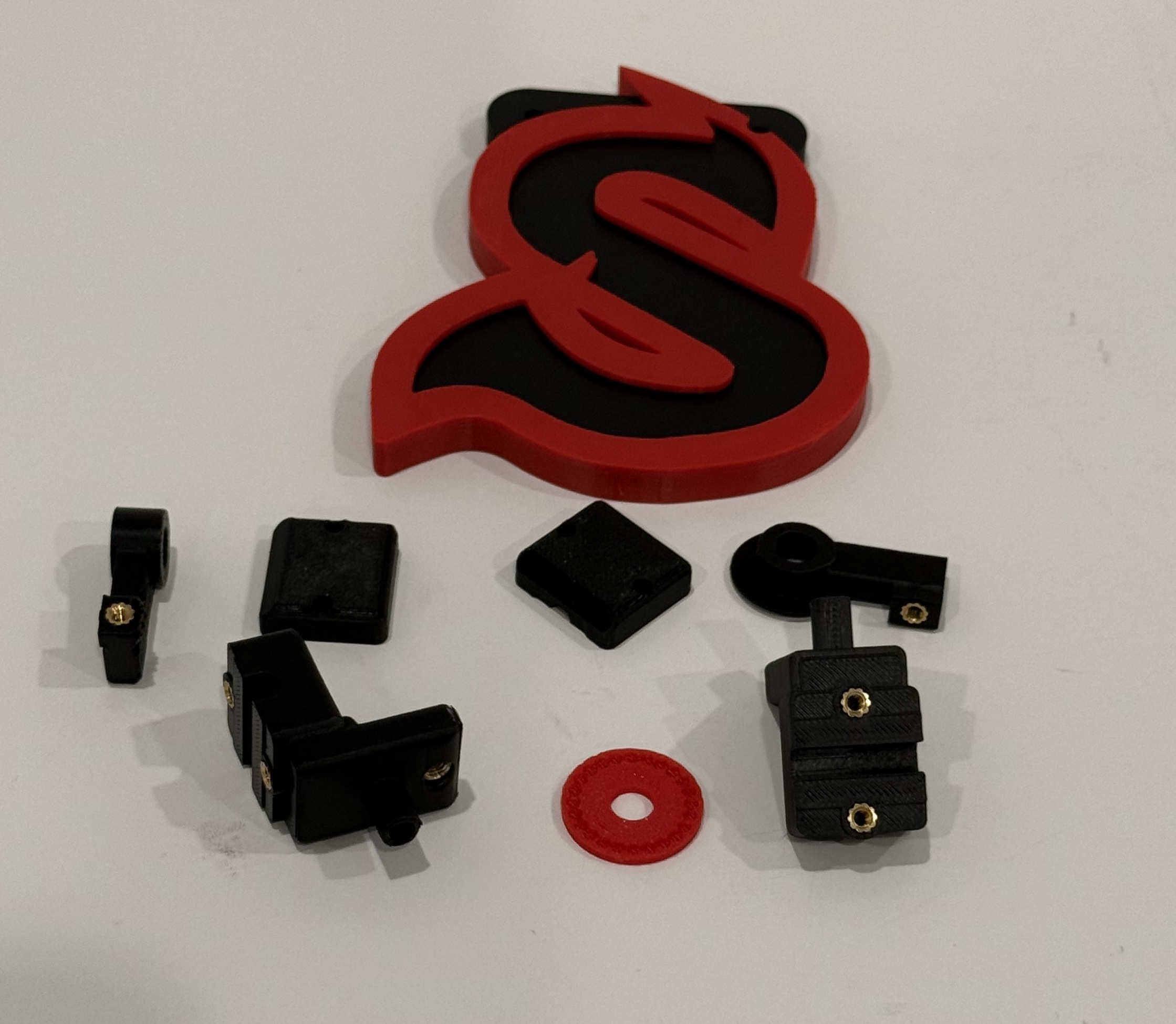
The WAVE needed new handle cases that follow the actual round metal handle path. Two identical common caps clamp those cases in place while independent left and right retained pivots provide the motion.

  • WAVE-specific handle geometry
  • Independent retained pivots
  • Common left/right case caps
  • Normal carrying-handle access preserved
The reusable layer

The stand side of the design was separated into a standardized 46 mm-center Header Mule. That interface carries the keyed pivot geometry and mounting locations while leaving the visible stand body free to change.

  • 46 mm pivot-center spacing
  • Keyed shear-load interfaces
  • Replaceable detent mechanism
  • Custom stand body outside the core

SMUT™ architecture

Keep the mechanics.
Change the shell.

The iX14 project proved the side-mount pivot concept. The Spirit WAVE adaptation pushed that idea one step further by separating the mechanism into reusable layers instead of baking every decision into one stand.

01WAVE handle casesRadio-specific fit
02SMUT™ pivotsRetained indexed motion
03Header MuleStandardized 46 mm core
04Spirit-S standOne visual implementation
THE FORMULA standardized mechanical header + radio-specific case interface + whatever stand body you want

Reusable Header Mule

The boring part
is the important part.

At the center of the stand is a physically validated mechanical header that locks into the two SMUT™ pivot stubs. The Spirit-S outline, red perimeter and raised logo treatment are decoration around that interface, not the interface itself.

FROZEN CORE

66 × 18 × 7 mm

The current Header Mule preserves the geometry that matters: 46 mm mounting centers, keyed left/right pivot interfaces, screw locations, header thickness and the pivot/rotation clearance envelope.

The underside is intentionally flat. Chamfers, bevels, logos and stand-specific shaping get added only after a new stand body is built around the core.

DESIGN INTENT

Build through it.

Import the frozen Header Mule geometry, model a completely different stand body around or through it, merge the body into the header and leave the mechanical interfaces alone.

The STL is the canonical reusable geometry. The SCAD preserves development/reference information and still points back to the original iX14 donor geometry, so it is not presented as a standalone parametric generator.

Actual build

Parts on the bench.
Stand on the radio.

This was never approved because the CAD looked convincing. The cases, pivots, Header Mule and Spirit-S stand were printed, assembled and exercised on the actual transmitter.

Real-world fit

The radio still has
to live with it.

A stand that works on a desk but makes the transmitter annoying everywhere else is not finished. Handle access and transport fit were part of the physical validation.

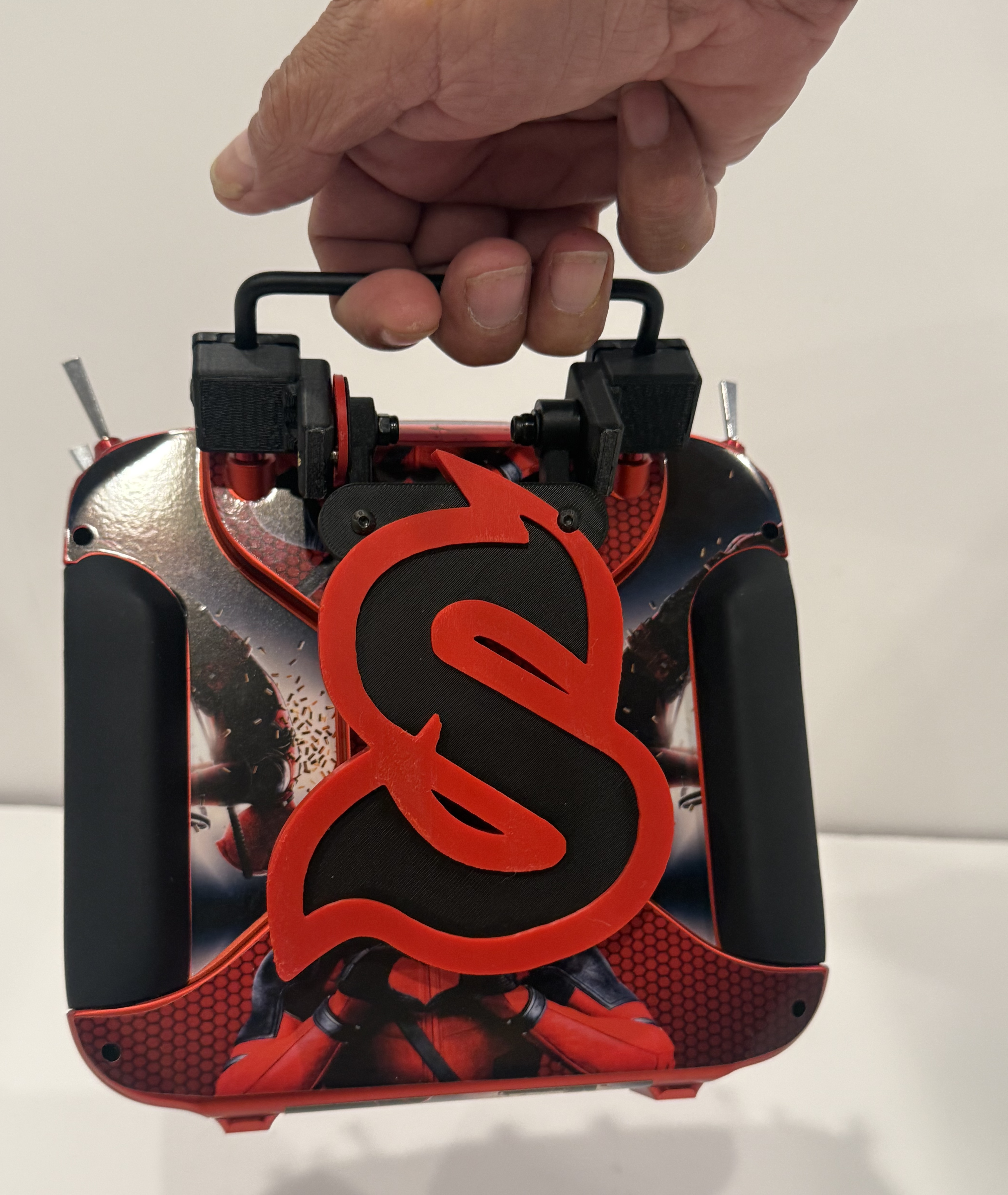
Spirit WAVE carrying handle clearance with the stand installed
Carry-handle clearanceThe installed stand leaves the normal handle opening usable.
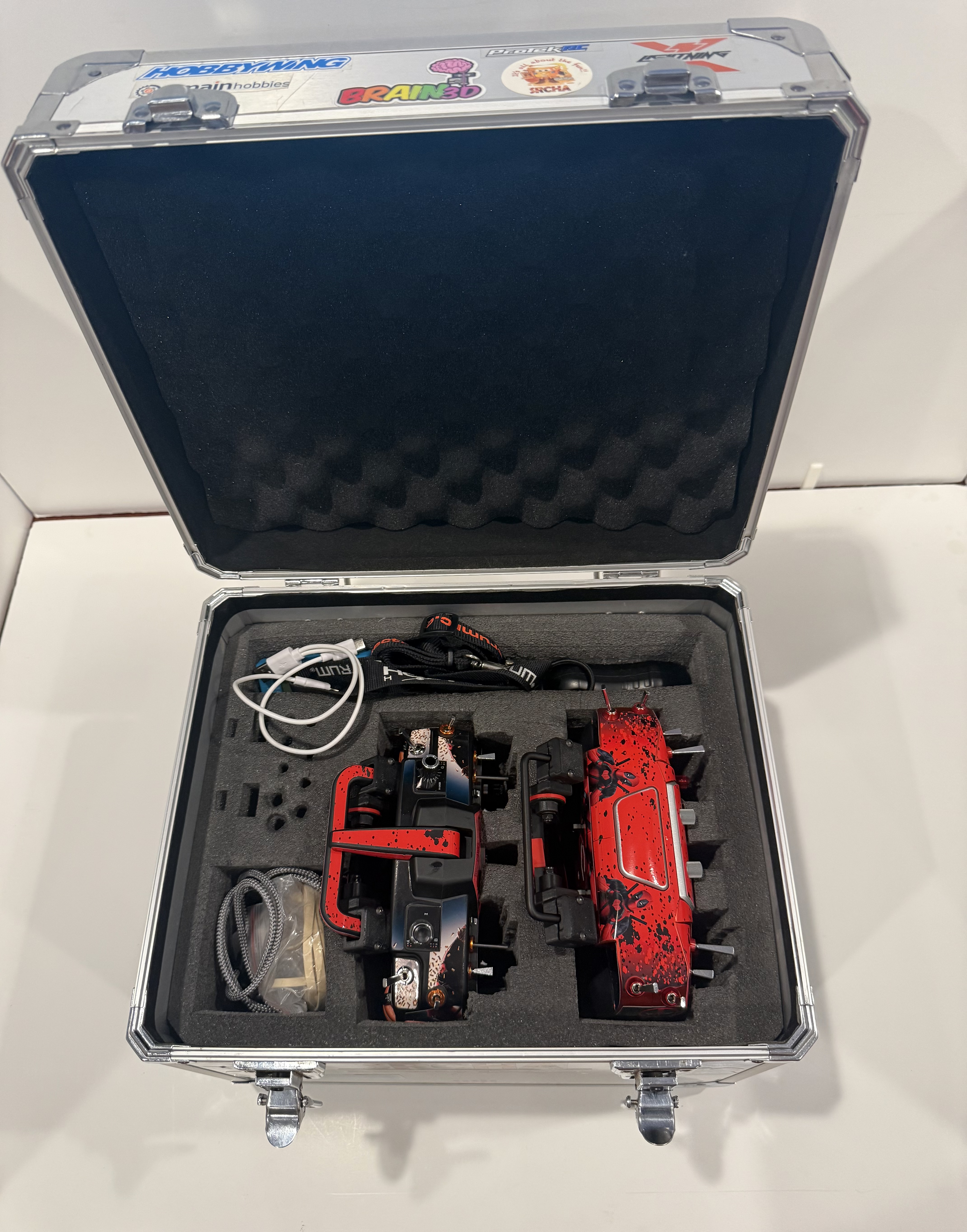
Spirit WAVE transmitter with stand installed inside a Spektrum two-radio carrying case
Transport realityThe stock Spirit case will not accept the radio with the stand installed unless the case is modified. The documented build travels in a Spektrum two-radio case.

Things to know

The little details
that save cussing later.

The repository has the full assembly instructions. These are the WAVE-specific details worth knowing before the heat-set iron and hex drivers come out.

01 // INSERT

Clean the plunger collar if needed

The M4 insert opening can print a little rough because of its location. Lightly clean it with a reamer; do not unnecessarily enlarge the bore.

02 // CAPS

Both caps are identical

There is no left and right cap. Install each one with the beveled edge facing away from the radio.

03 // CLAMP

The visible gap is normal

Tighten the cap screws until there is a good bite on the handle. Do not keep tightening just to force the cap flush to the case body.

04 // CASE

Stock Spirit case limitation

The WAVE will not fit in the stock Spirit case with this stand installed unless the case is modified.

AI-assisted iteration

The printer and the actual radio got the final vote.

AI helped translate measurements into printable geometry, adapt the WAVE handle-path cases, preserve the proven SMUT™ pivot system, separate the Header Mule into a reusable core, refine the Spirit-S stand and keep the documentation organized. Physical fitment decided what survived.

MeasureModelPrintTestReviseRepeat

Build resources

The website tells the story.
GitHub has the build.

The public repository is the authoritative source for the current printable geometry, ready-to-slice Bambu projects, hardware requirements, assembly instructions and safety information.

Bambu Studio 3MFsSeparate ready-to-slice projects for the mounting hardware and multicolor Spirit-S stand.
STL / SCADIndividual geometry plus a merged stand STL for non-Bambu workflows.
Header MuleThe canonical reusable STL and development/reference SCAD live with the mounting hardware.
Assembly documentationDetailed Markdown instructions plus a printable three-stage PDF guide.
Hardware buy listMetric fasteners, heat-set inserts and the M4 spring-loaded ball plunger.
License and disclaimerCC BY-NC 4.0 terms plus the full use-at-your-own-risk notice.
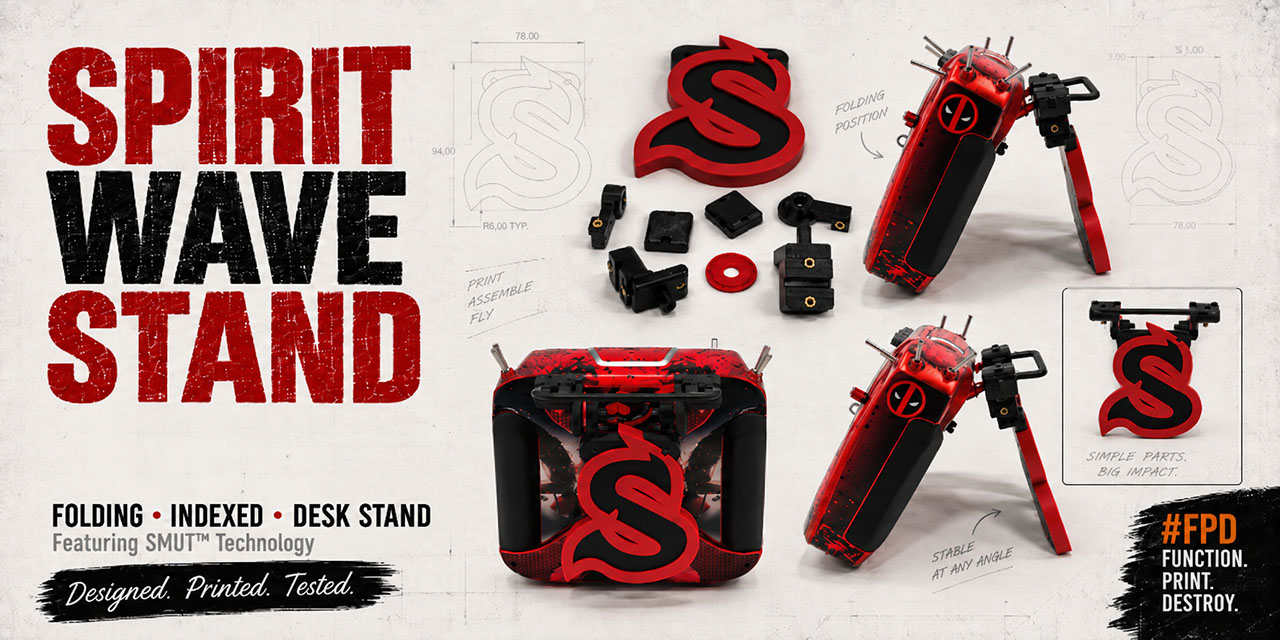
Spirit WAVE folding indexed stand social graphic
Independent maker project. This project is not affiliated with or endorsed by Spirit System. It is a desk/simulator stand, not a replacement carrying handle. Inspect printed parts, inserts and fasteners periodically and verify stability before use. See the repository for the full disclaimer and CC BY-NC 4.0 license terms.
#FPD
Function. Print. Destroy.

Same acronym, reusable architecture. The sacrificial prints did their jobs so the final parts could keep theirs.

Arroyo Cooperative

Built for highly
questionable purposes.

The Spirit WAVE project took the proven SMUT™ mechanism and turned it into a reusable stand platform: radio-specific cases on one side, a standardized mechanical header on the other, and whatever stand body you want in between.